Haftalık E-Bülten
Moda dünyasında neler oluyor? Yeni fikirler, öne çıkan koleksiyonlar, en vogue trendler, ünlülerden güzelllik sırları ve en popüler partilerden haberdar olmak için haftalık e-bültenimize kaydolun.
Haftalık E-Bülten
Moda dünyasında neler oluyor? Yeni fikirler, öne çıkan koleksiyonlar, en vogue trendler, ünlülerden güzelllik sırları ve en popüler partilerden haberdar olmak için haftalık e-bültenimize kaydolun.
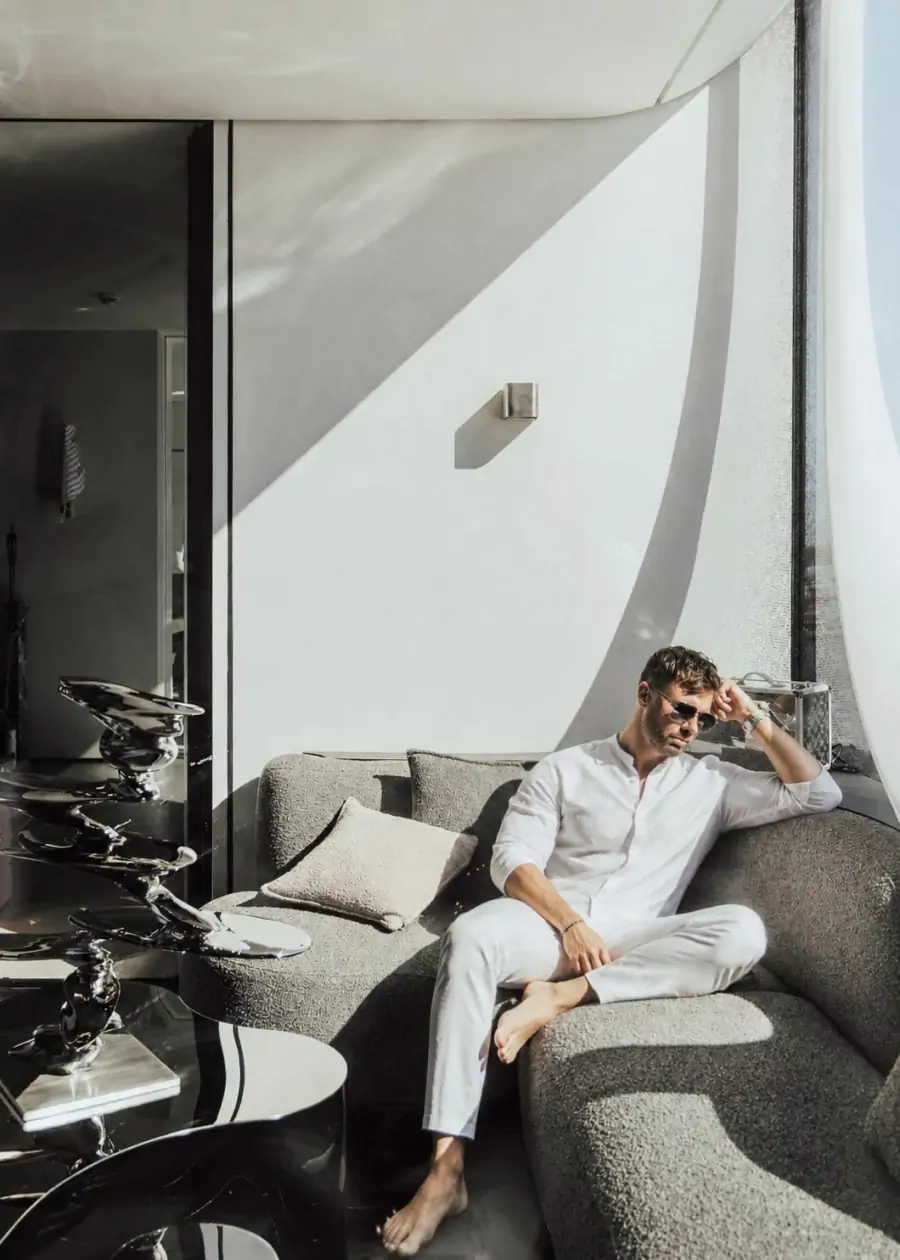
There are homes designed to impress, and then there are homes designed to reveal. André Borchers’ extraordinary residence does both effortlessly. Hidden in Hamburg’s Elbphilharmonie, high above the city — in a world of reflective materials, monumental stone, contemporary art, and deeply personal treasures, the collector has created an apartment that feels less like a penthouse and more like a living, breathing exhibition of identity.
Step inside Andre Borchers’ world and it becomes immediately clear: this is not simply an apartment, but a meticulously composed visual universe. A gallery, fashion archive, and sculptural retreat at once, the residence reflects Borchers’ instinct for dramatic contrasts — where bronze meets marble, collectible design lives beside deeply personal heirlooms, and contemporary art punctuates nearly every sightline.
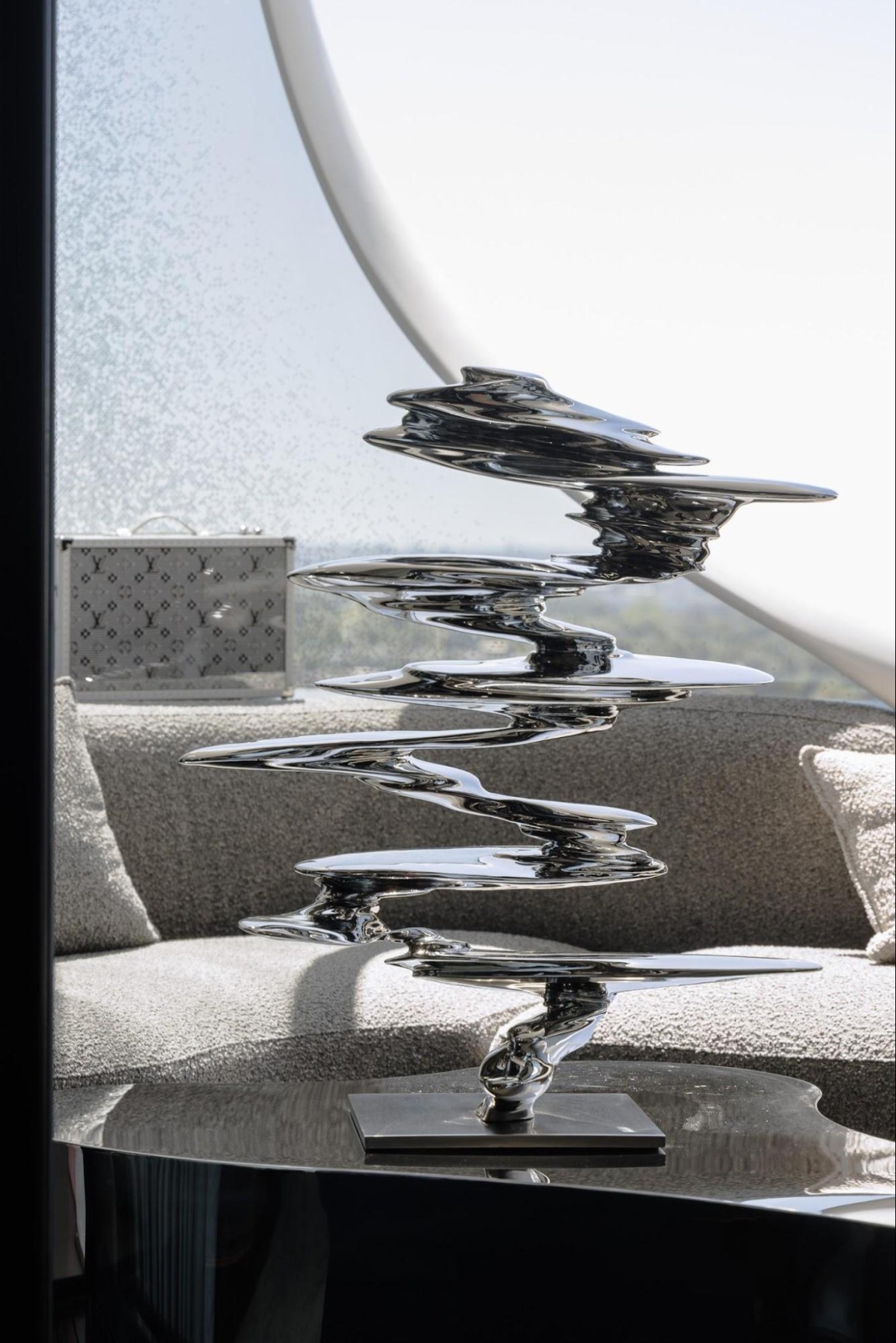
Sculpture by Tony Cragg on a 1970 Karl Springer table. A Louis Vuitton mirrored speaker in the background.
Nothing feels incidental. Every object, every artwork, every reflection has been carefully considered — yet the apartment never feels staged. His newly renovated terrace with its chromatic design feels like an art gallery itself. In the middle two 1970 Karl Springer tables with an impressive Tony Cragg sculpture as the center of attention.
This apartment pulses with personality: glamorous but intimate, sculptural yet emotional, maximalist while remaining impeccably disciplined.
For Borchers, the home was never about following trends or subscribing to the increasingly overused language of “quiet luxury.” In fact, his interiors speak fluently and unapologetically. They tell stories through texture, contrast, memory, and art.
“I wanted the apartment to feel cinematic,” Borchers says. “Not perfect. Not minimal. Alive.”
That sense of drama begins the moment one enters. Monumental mirrored surfaces and bronze finishes create a moody atmosphere reminiscent of a futuristic Art Deco salon. Architectural detailing catches the light throughout the day, while reflective stone amplifies every shadow and silhouette. The effect is immersive — almost theatrical.
Yet beneath the grandeur lies warmth.
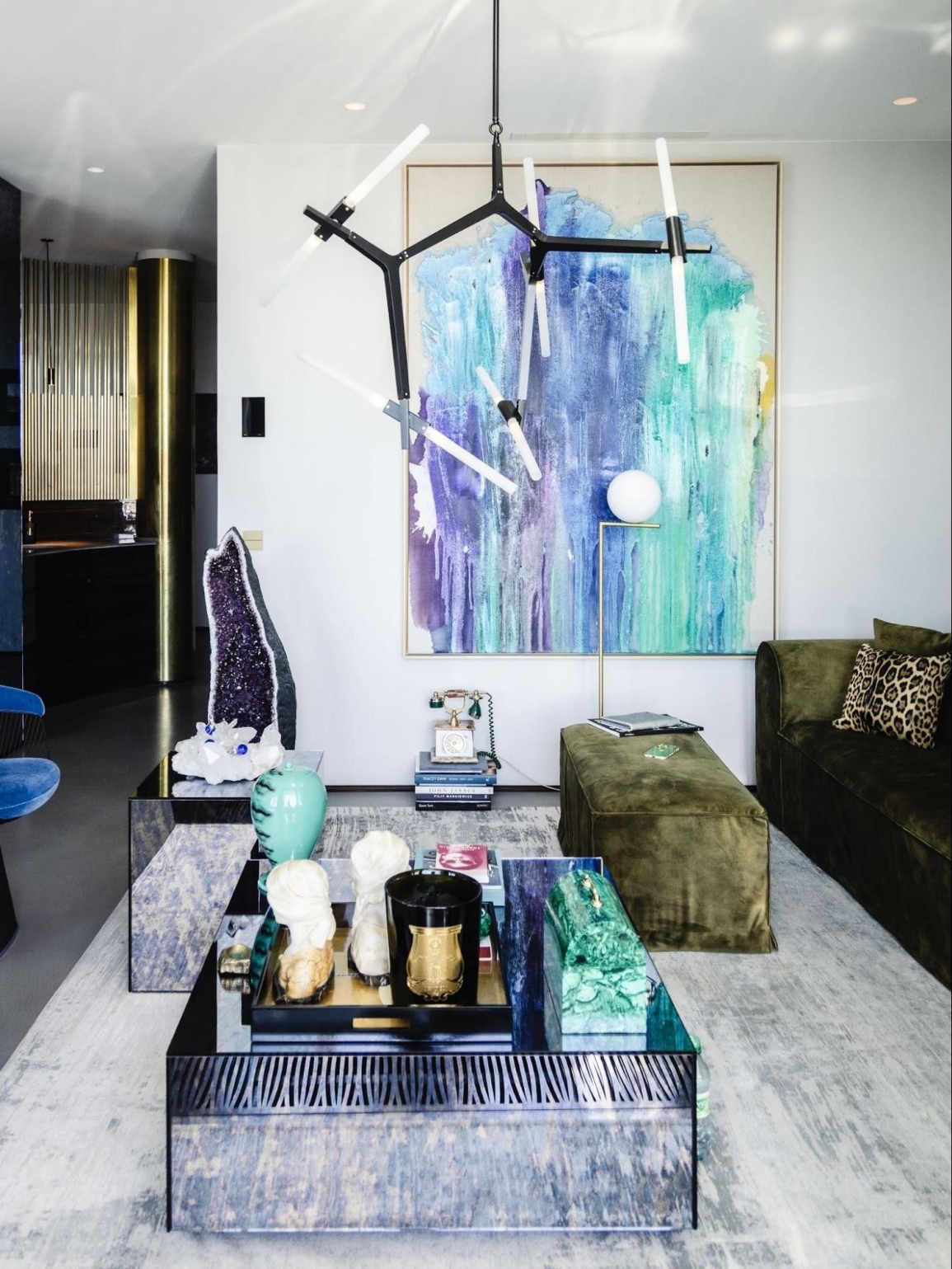
Vintage mirrored tables, vintage phone from his grandmother, mega amethyst and Paul Schrader art.
The apartment unfolds as a deeply personal narrative built around collectible design, contemporary art, fashion, and family heirlooms. Borchers moves fluidly between eras and aesthetics, pairing museum-worthy pieces with sentimental objects in ways that feel instinctive rather than curated for effect.
In the living room, olive velvet seating contrasts against cool marble and high-gloss lacquered surfaces. Jaguar cushions — custom-made from a vintage Jaguar coat once owned by his grandmother — inject a layer of emotional nostalgia into the otherwise sculptural environment. Monumental amethyst crystals rise like natural sculptures beside mirrored tables reflecting light across the room.
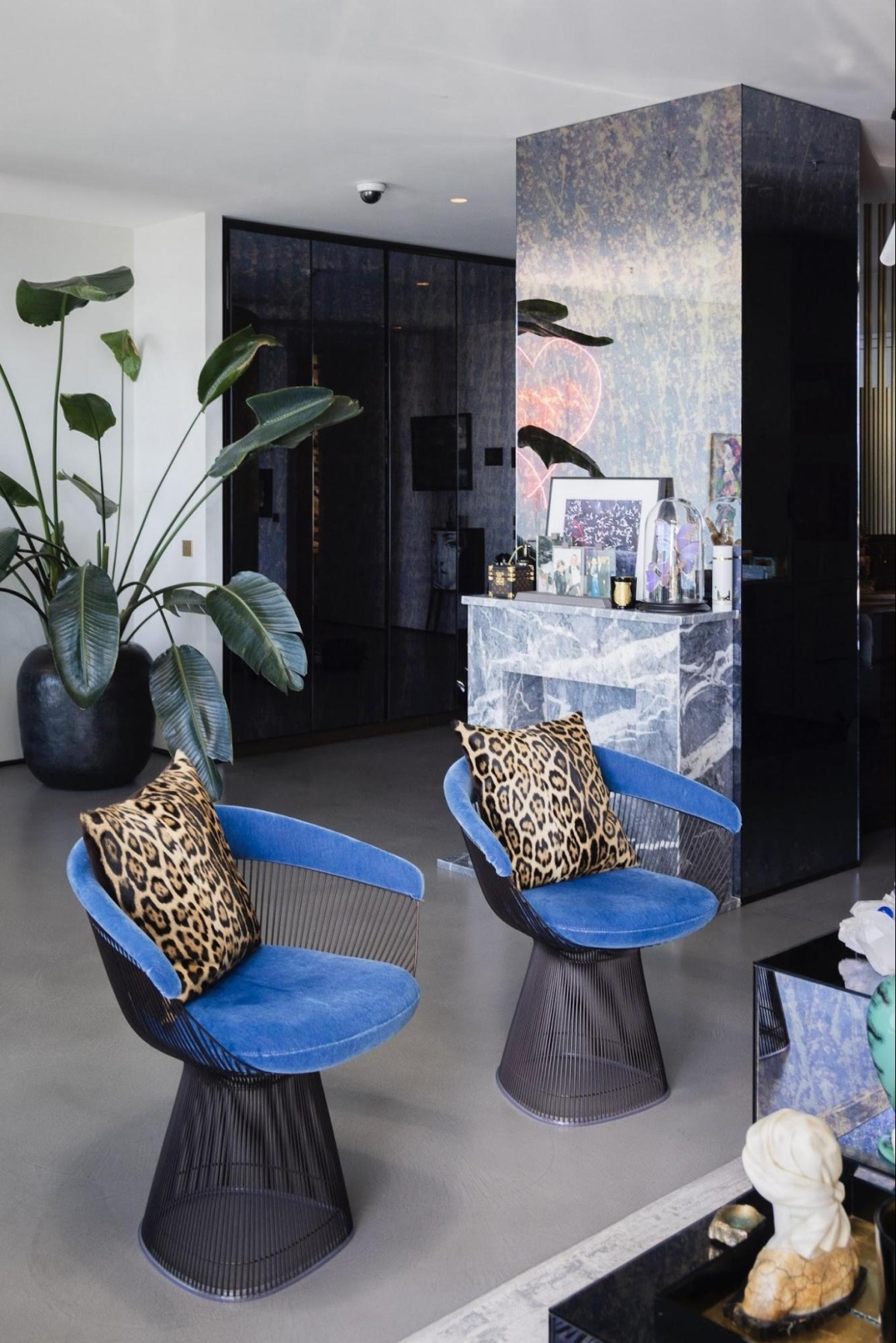
Cushions made from a vintage Jaguar coat of his grandmother.
Hovering overhead is a dramatic chandelier by Roll & Hill, its angular form adding movement to the space. Behind it, a striking figurative artwork by rising Indian artist Raghav Babbar anchors the room with emotional intensity.
“I love pieces that make you feel something immediately,” Borchers explains. “Whether that feeling is comfort, excitement, nostalgia, or curiosity.”
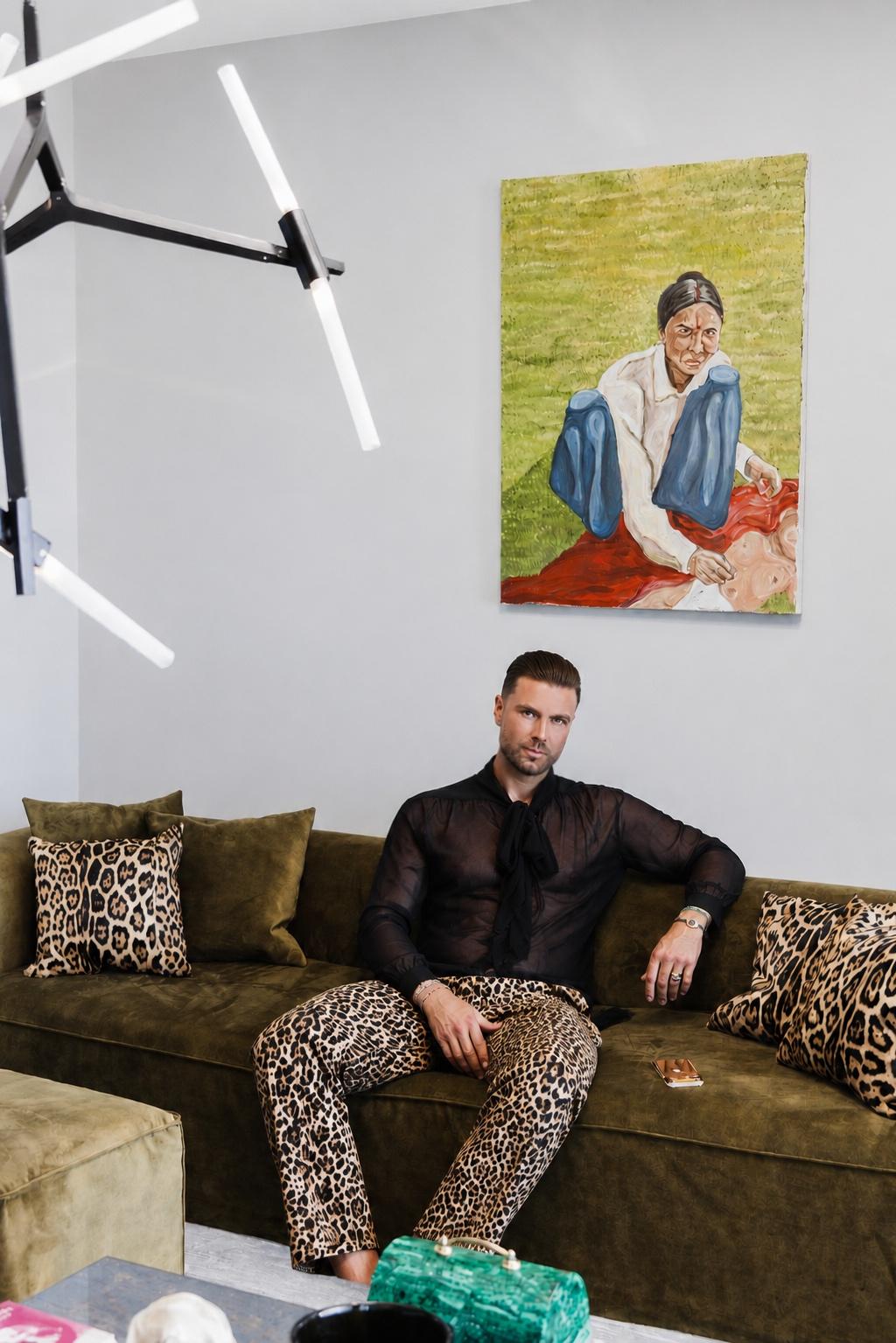
Andre Borchers on his couch. Above, an impressive art work by rising Indian star Rhagav Babbar; lamp by Roll and Hill.
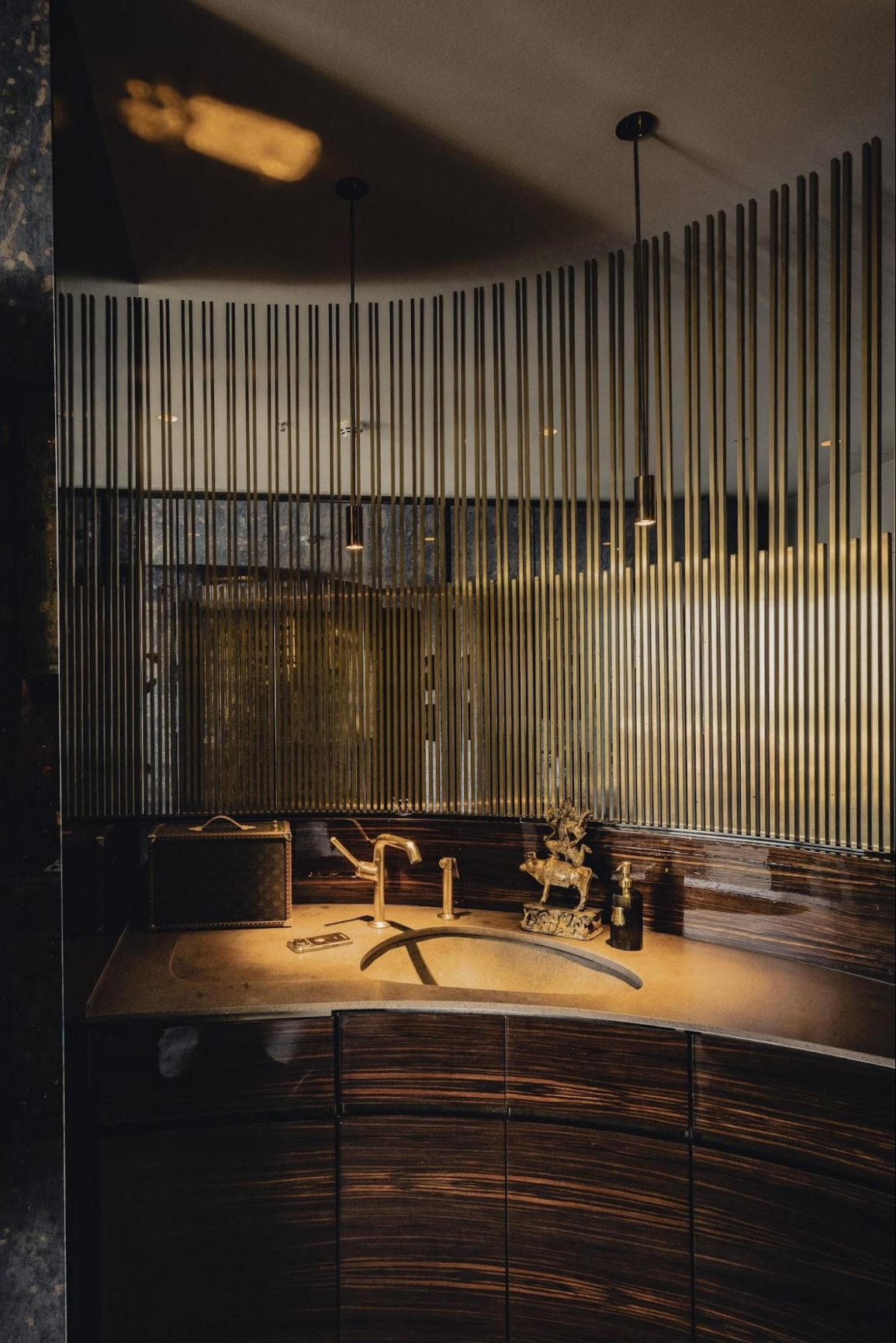
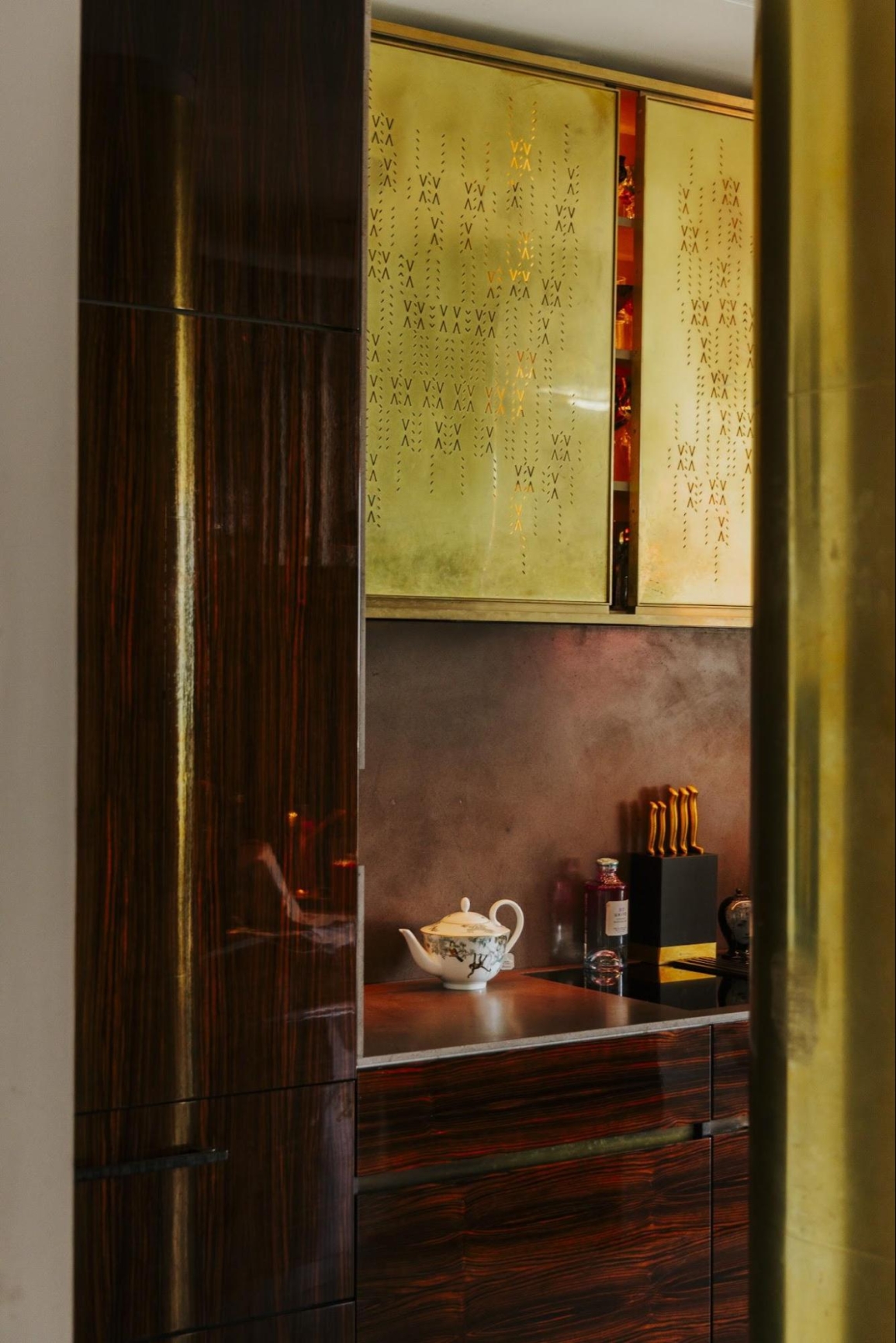
The custom kitchen by Birg Man Koen — crafted from rich palisander wood and bronze — resembles a collectible art object more than a functional culinary space. Vertical bronze slats rise toward the ceiling, filtering light through the room like a modernist screen, while highly polished surfaces create endless reflections and visual depth.
The dining area introduces a softer, more romantic dimension to the apartment’s otherwise sculptural atmosphere. Beneath Tracey Emin’s rare neon work reading “You Forgot to Kiss My Soul”, translucent emerald-green chairs surround a Warren Platner dining table, creating a striking dialogue between art, light, and reflection. The glowing installation casts a warm pink hue across the minimalist architecture, balancing the darker bronze accents found throughout the residence. Sculptural objects and curated decorative pieces complete the setting, transforming the dining room into an intimate contemporary gallery where collectible design and emotional storytelling coexist effortlessly.
“It’s one of my favorite pieces in the apartment,” Borchers says of the Emin neon. “There’s vulnerability in it. It softens the architecture.”
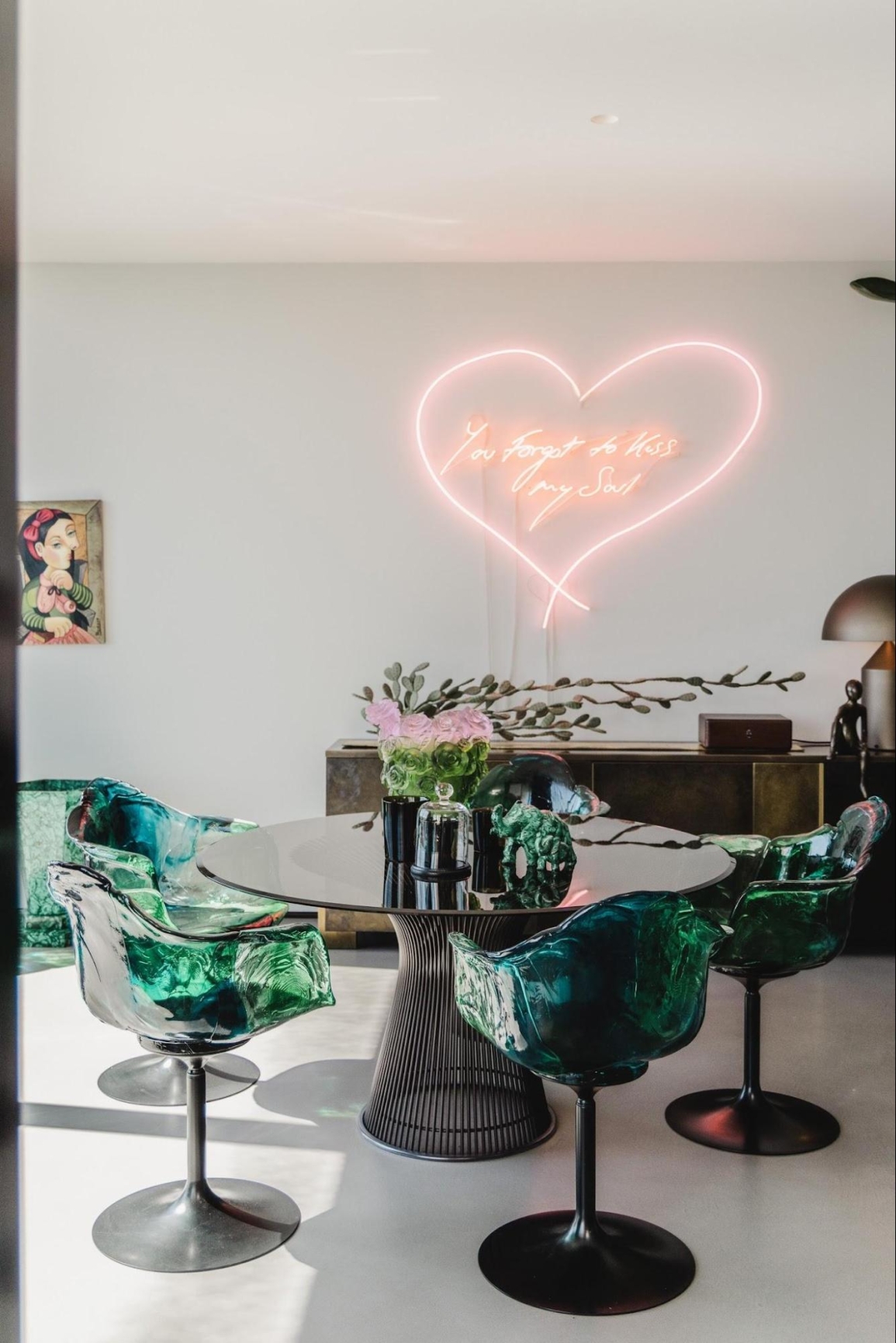
Rare neon art by Tracey Emin; chairs by Edra. Flower vase by Daum and a painting by Picasso on the left - underneath a grand vase out of malachite. Sculptural cactus art on the bronze sideboard.
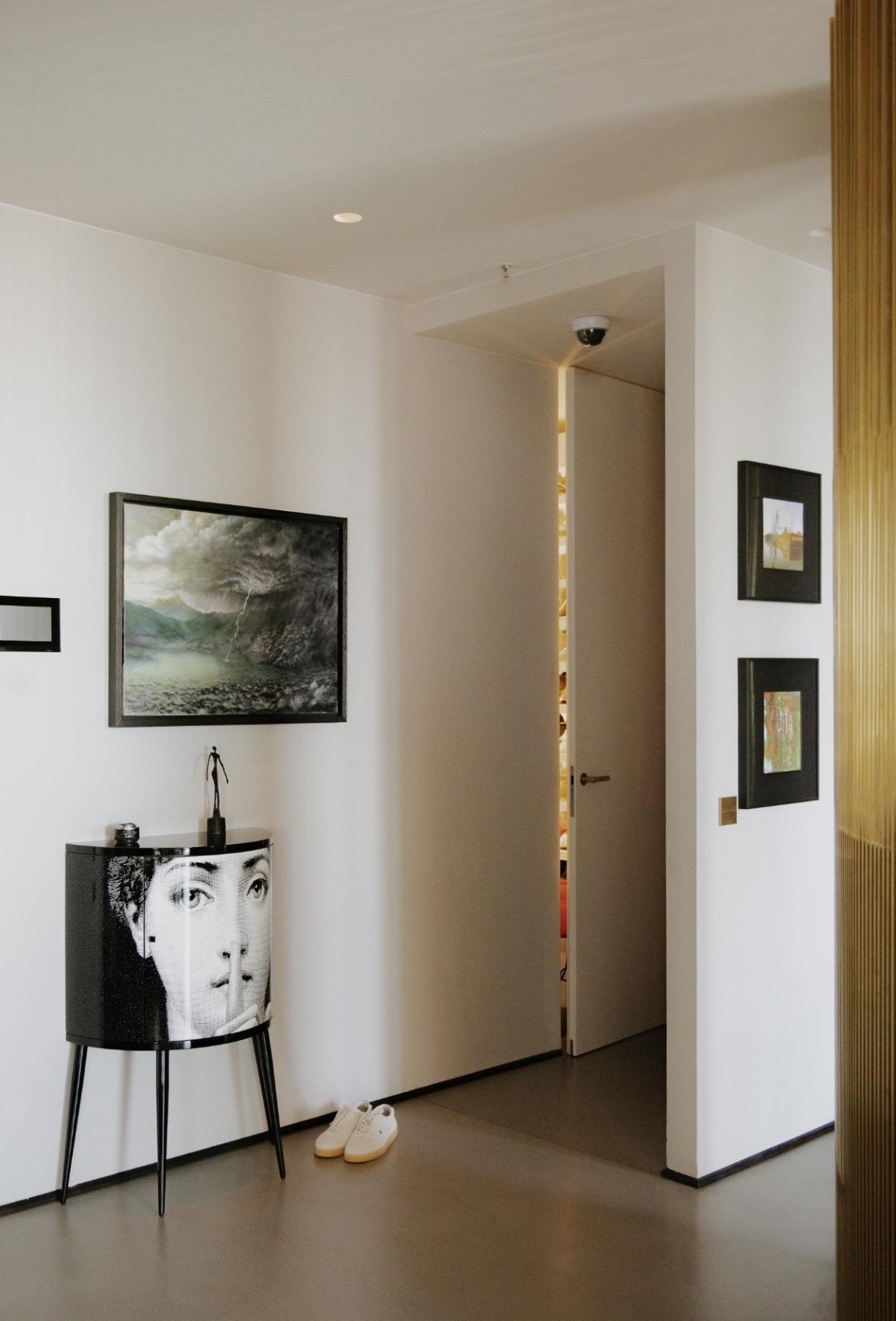
Art by Felix Blume, Giacometti, and Gerhard Richter.
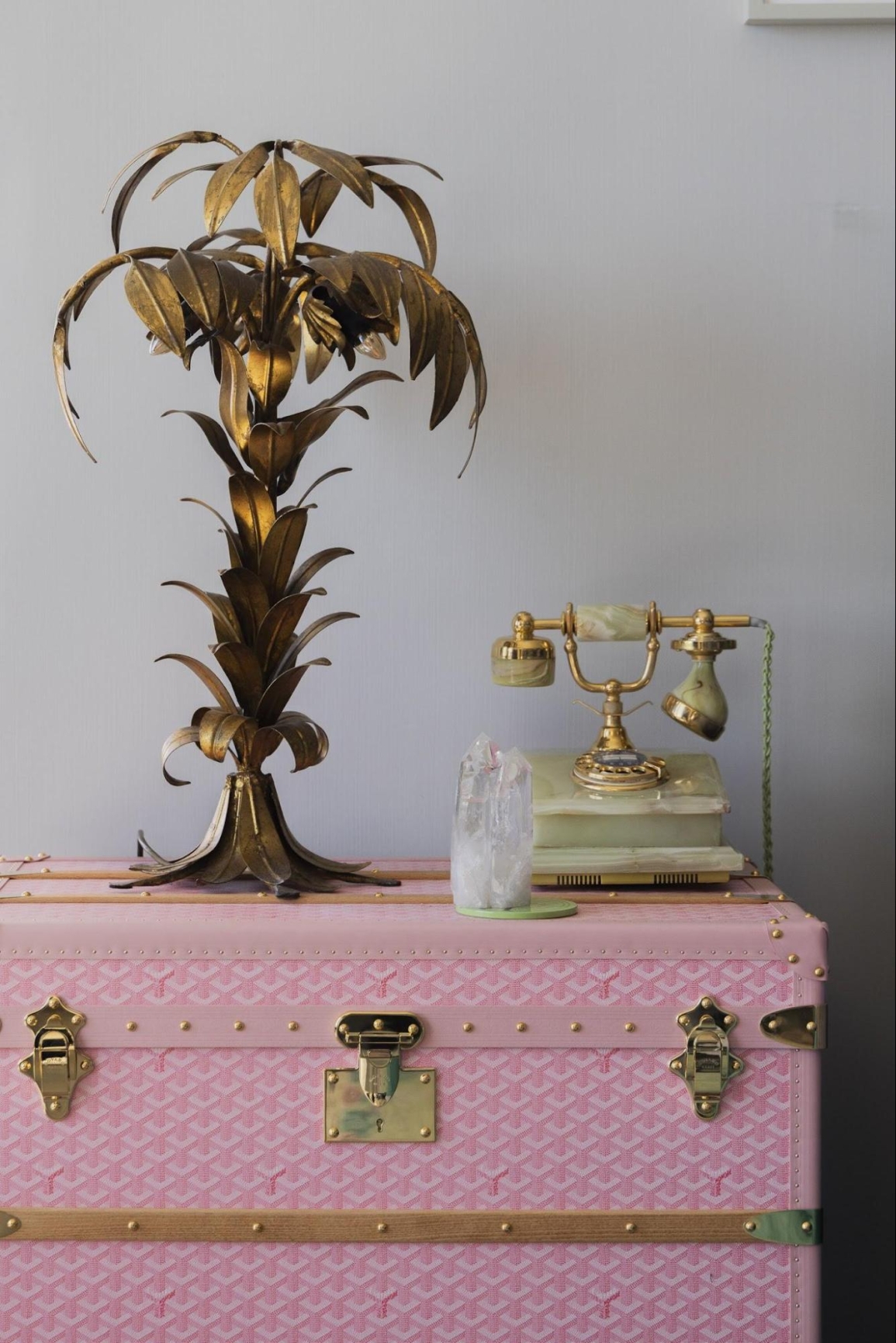
Limited edition Goyard trunk, vintage phone, and palm tree lamp by Hans Kogl.
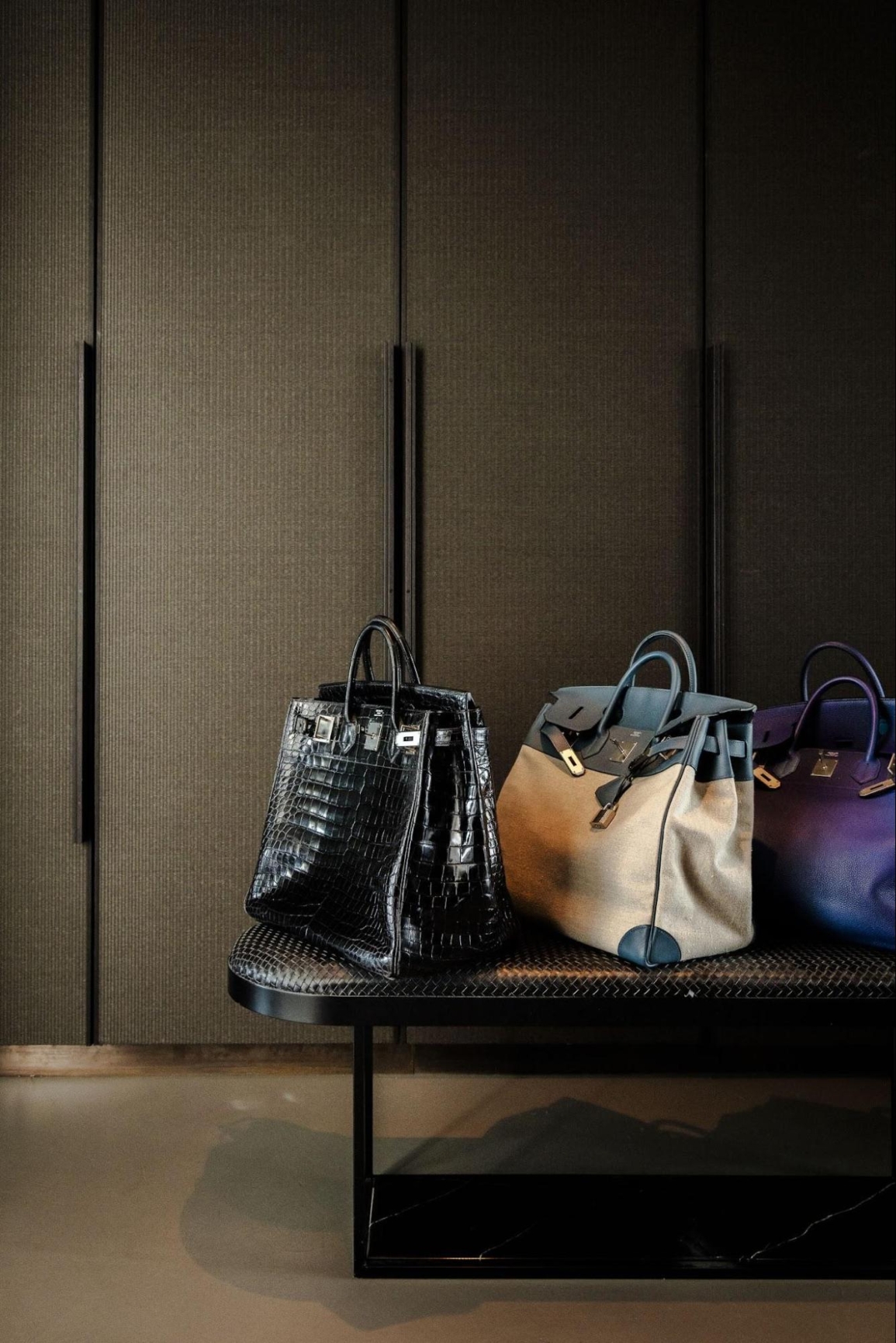
A glimpse of his enormous Hermès collection.
Fashion, unsurprisingly, plays a central role in Borchers’ world.
Inside mirrored wardrobes lie an extensive Hermès collection, displayed with the precision of a luxury boutique. Rare bags in exotic leathers rest beside limited-edition accessories and custom trunks, while an illuminated shoe room reveals rows upon rows of designer footwear organized like an archive. Sneakers, loafers, slippers, and bespoke pieces line softly lit shelving from floor to ceiling.
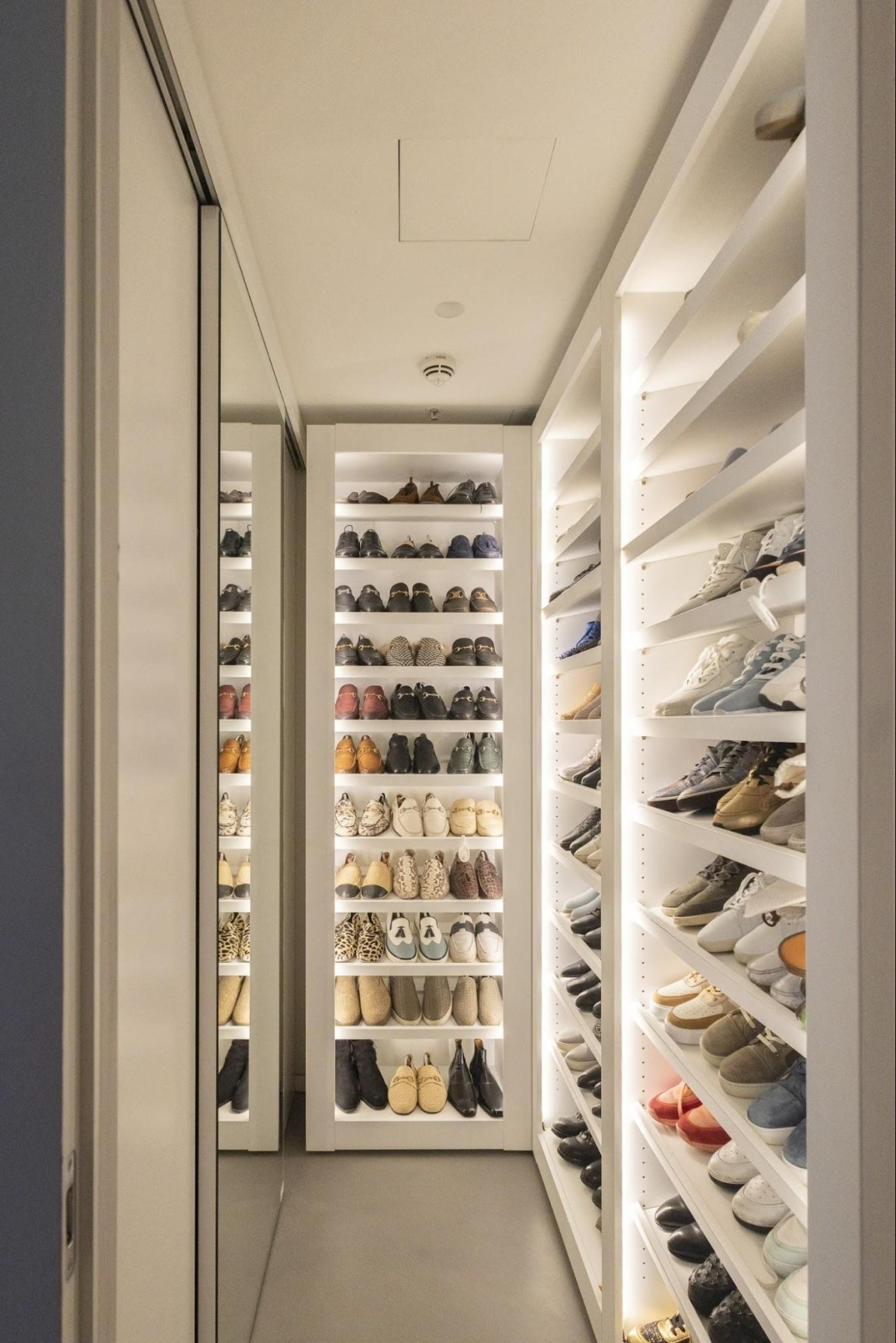
Yet even these highly luxurious moments retain a sense of intimacy rather than excess.
“There’s a difference between collecting and surrounding yourself with things that genuinely inspire you,” Borchers reflects. “I only keep pieces that have energy.”
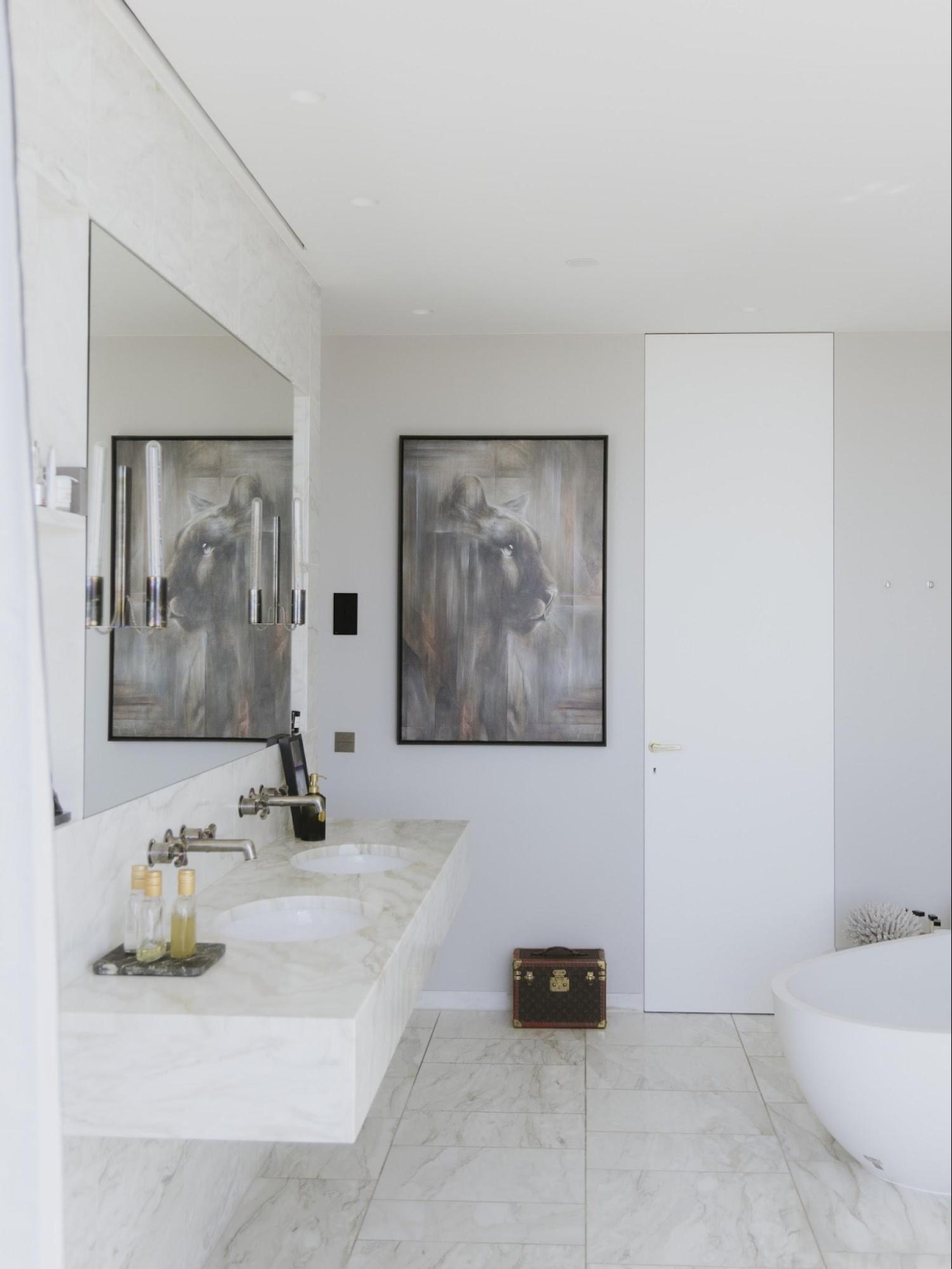
That idea of energy — emotional, spiritual, artistic — runs throughout the apartment.
In quieter corners, Borchers introduces softness and restraint. The master bathroom, clad entirely in luminous white marble, feels almost meditative compared to the darker social spaces. Above the vanity hangs a lioness artwork by Joshua Gumpert, its restrained power adding subtle grace to the serenity of the room.
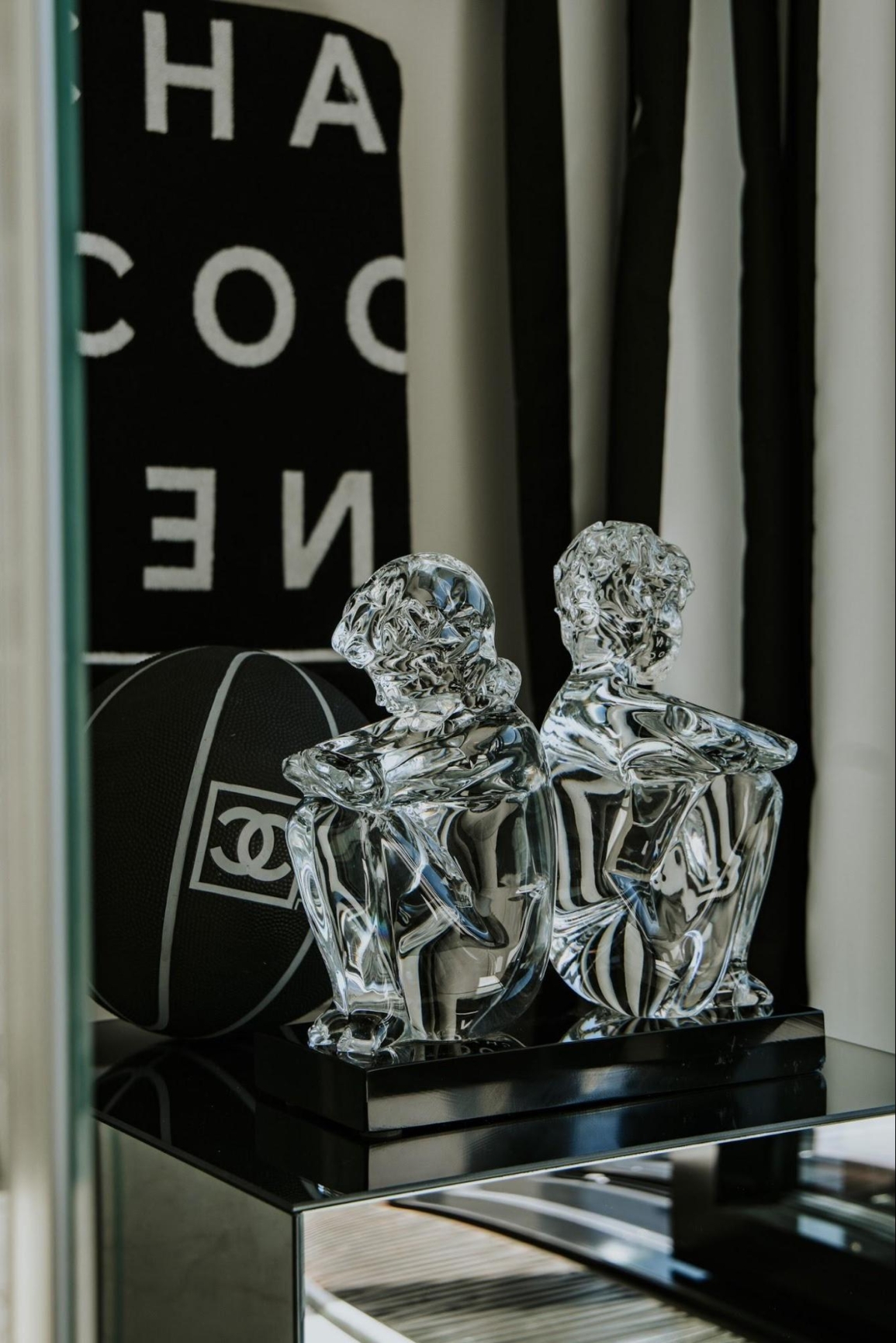
There are also moments of unexpected playfulness woven into the interiors. Crystal sibling sculptures sit beside Chanel objects and contemporary sports memorabilia. Neon art glows above collectible furniture. Picasso sketches converse with modern abstract works. Nothing feels overly precious.
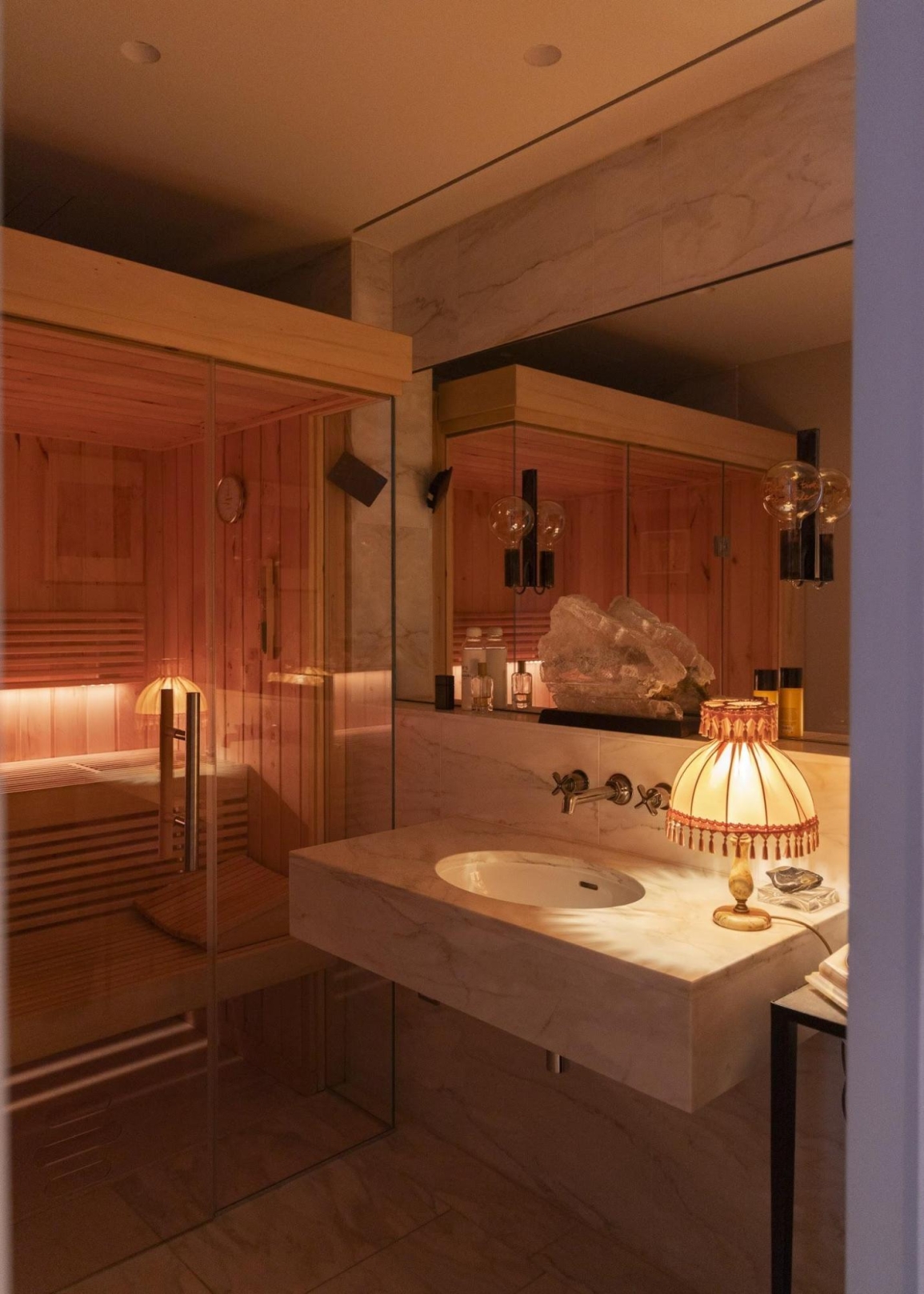
Nearby the bathroom, the private sauna channels an entirely different atmosphere. Illuminated in amber light and styled with a fringed vintage lamp from the 1970s, the space evokes the sensual glamour of an old European spa. Warm wood, soft shadows, and reflective surfaces transform the room into an intimate retreat hidden within the grand apartment.
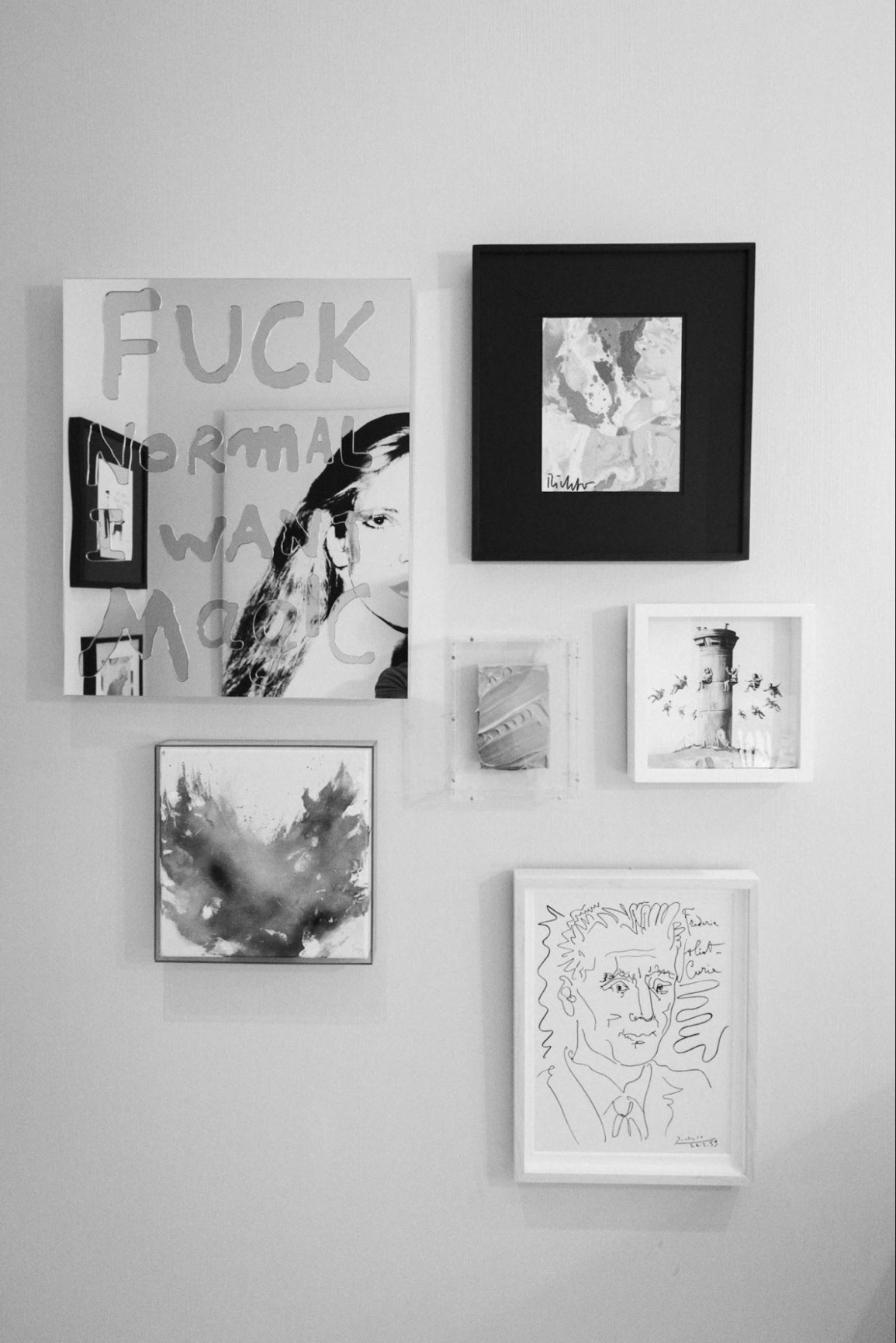
Excitement extends throughout the apartment’s extraordinary art collection, where blue-chip icons coexist effortlessly beside emerging contemporary voices. Works by Gerhard Richter, Picasso, Banksy, Andy Warhol, and Tracey Emin appear alongside those of Ruben Benjamin and Soraya, creating a dialogue between established masters and a younger generation of creatives.
And perhaps that is what makes Borchers’ home so compelling.
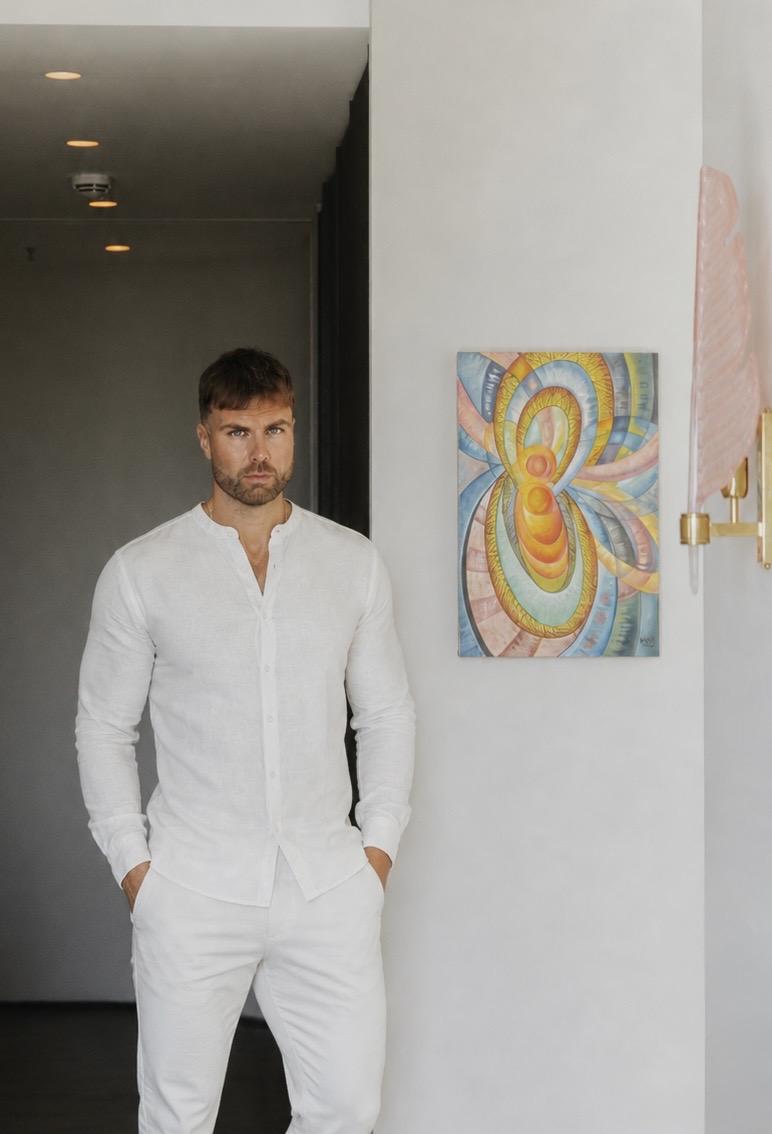
André Borchers next to a painting by Frantisek Kupka.
Despite its museum-worthy collection of art, fashion, and design, the apartment never loses its humanity. Family history appears everywhere — in inherited objects, repurposed fabrics, sentimental styling choices, and pieces chosen not for status, but for memory.
The result is a home that transcends aesthetics.
It is glamorous without coldness. Maximalist without chaos. Luxurious without sterility.
Curated like a contemporary gallery yet lived in with complete emotional honesty, André Borchers’ sculptural sanctuary ultimately becomes something far more powerful than a beautiful home - it is a portrait of a man who understands that true luxury lies not in perfection, but in personality.