Haftalık E-Bülten
Moda dünyasında neler oluyor? Yeni fikirler, öne çıkan koleksiyonlar, en vogue trendler, ünlülerden güzelllik sırları ve en popüler partilerden haberdar olmak için haftalık e-bültenimize kaydolun.
Haftalık E-Bülten
Moda dünyasında neler oluyor? Yeni fikirler, öne çıkan koleksiyonlar, en vogue trendler, ünlülerden güzelllik sırları ve en popüler partilerden haberdar olmak için haftalık e-bültenimize kaydolun.

At the Met Gala, where clothing is usually the loudest form of speech, one of the evening’s most curious guests appeared without any. On May 5, AGIBOT’s A2 humanoid robot appeared alongside Alexander Wang and moved through fashion’s most symbolic room as a machine rather than a dressed body. The image was slightly uncanny, faintly funny, and more revealing than it first appeared. If humanoid robots are beginning to enter public life, fashion has not yet decided what they should wear.
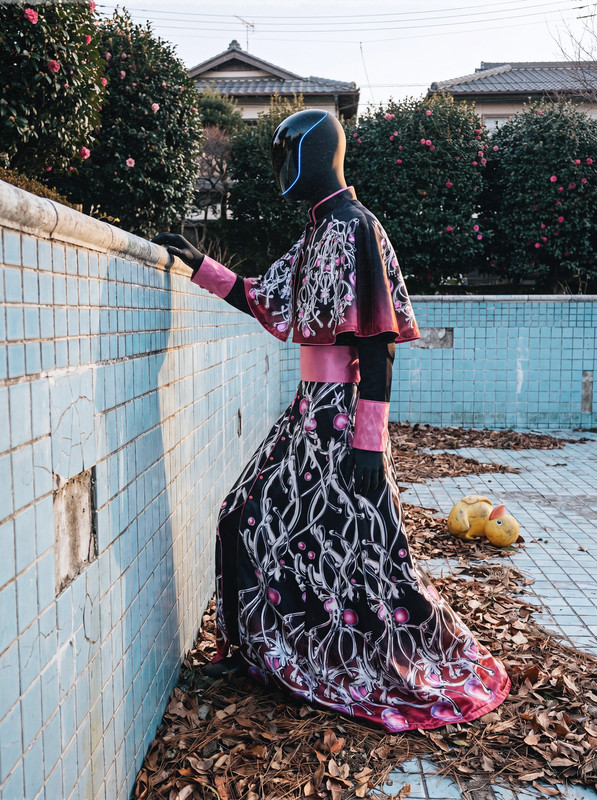
Maison Roboto, the Paris atelier founded in 2024, is the first fashion house devoted entirely to couture for humanoid robots and treats the subject with the seriousness of a couture problem. The idea may sound almost comic at first, until the practicalities begin to pile up: rigid joints, fixed posture, no body heat, no small instinctive gestures to help a sleeve fall correctly, no private taste to animate the garment from within. From its first day, Maison Roboto set itself a very particular task: to build garments for non-human bodies using the discipline, fuss and slowness of haute couture, instead of borrowing the visual language of uniforms, props or product design.
Everything Maison Roboto produces is developed in-house in its Paris atelier, where hand construction is central to the process. The garments that have appeared so far have more in common with sculptural fashion than with technical apparel. Surfaces are drawn, painted or embroidered by hand. Shapes are heightened, almost ceremonial, sometimes deliberately strange. The references named by Maison Roboto place it in a familiar but ambitious lineage: Iris van Herpen's engineered structures, and the longer memory of Thierry Mugler’s chrome cyborg on a Paris runway in 1995, when fashion last seriously asked where the body ended and the machine began. What matters here is the silhouette produced when fabric has to negotiate with a machine, and the kind of authority that silhouette carries once it enters a room.
The engineering is where the romance becomes less dreamy and more exacting. A human wearer does a surprising amount of work for a garment. We breathe into it, warm it, tug it into place, bend, soften, compensate. A humanoid robot offers none of that help. It may wear a piece for eighteen hours without making a single adjustment. Maison Roboto has had to develop its own closures, tolerances and material solutions for bodies that do not collaborate from inside the clothes. According to Maison Roboto, this has produced an internal archive of construction methods built through repeated physical prototyping, the sort of knowledge that cannot simply be lifted from existing documentation.
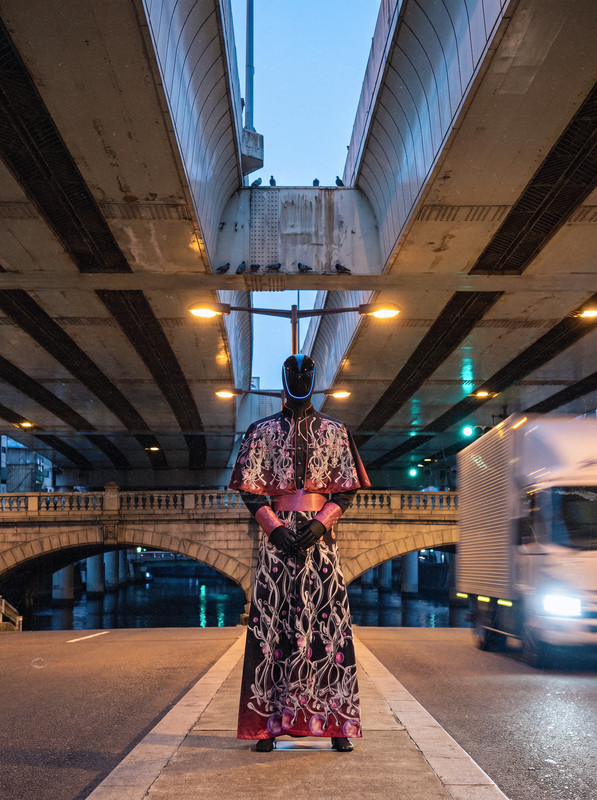
In early 2026, Maison Roboto presented ICHOR, its debut couture collection and the one of the first named couture collections ever produced for humanoid robots. It was not staged as a runway spectacle. It appeared as a completed body of work: garments made over months, each one addressing a different facet of the question the house had chosen to pursue.
Some humanoid manufacturers have begun producing in-house garments for their own machines: clean technical separates that read as uniform. The work is competent and it solves the problem of presenting a humanoid in front of a camera. Maison Roboto is working in another register. Its interest lies less in making a robot look ready for employment, and more in what happens when a machine is given the visual weight of a dressed presence.
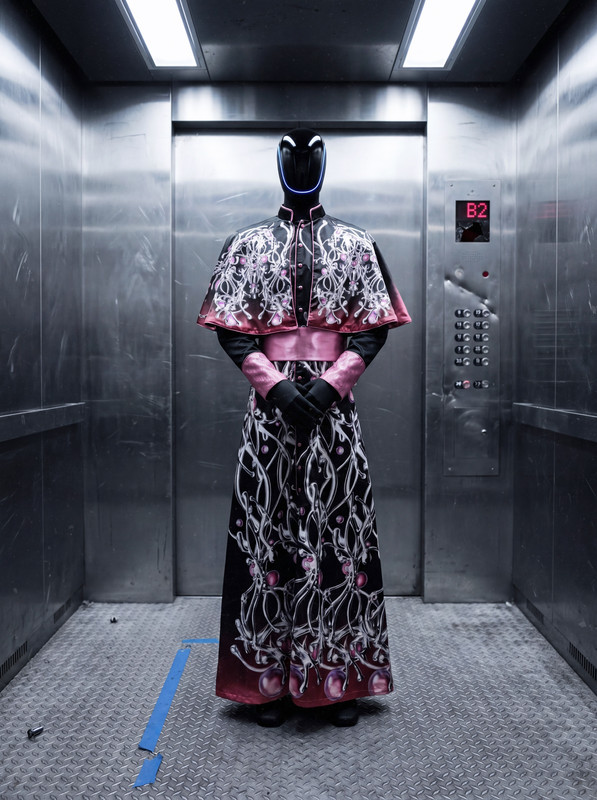
For Turkish readers, the more interesting frame for this work may be historical rather than technological. Ottoman court textiles were engineered objects as much as decorative ones, built to perform specific functions in specific ceremonial spaces, on bodies whose movements were prescribed in advance. The body inside was almost secondary to the function of the garment in the room. The parallel should not be overstated. Maison Roboto, a young Paris atelier, cannot be placed beside centuries of Bursa silk craftsmanship. But both are a reminder that ceremonial dress has long been a technical language as much as an aesthetic one, and that the body wearing the garment is not always the point.
What does it mean to dress a body that has no identity, no culture, no gender, no preference, and no awareness of being dressed? Maison Roboto's answer, at least for the moment, is that a dressed machine changes the room around it much as a dressed person does; the garment gives that change shape, intention, a little charge of theatre. Whether this becomes a lasting category of fashion or remains a beautiful anomaly is still unresolved. What is certain is that the question has left the realm of speculation. As humanoid robots begin to appear at fashion's most public events, the field will have to decide whether to dress them, and how.